Everybody has social needs, even when they’re at work.
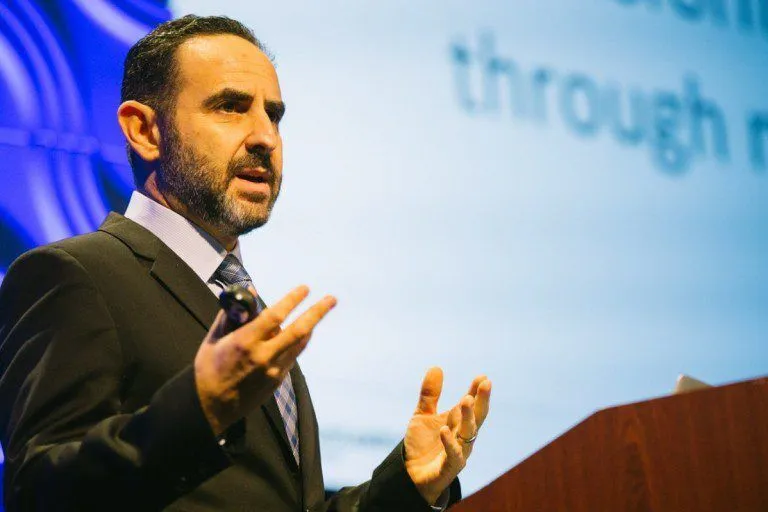
As NLI senior scientist Tessa West described at the NeuroLeadership Summit on Friday, getting those needs met has direct impacts on performance and how satisfied people feel on the job. Consider the below graph, which West shared during her presentation. It sketches out the five domains of social threat and reward and how they translate to engagement.
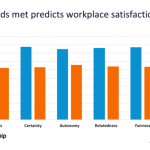
Those domains make up the SCARF model: status, or wanting to feel esteemed; certainty, or wanting context and clarity; autonomy, or being able to do your own thing; relatedness, or wanting to connect; and fairness, or feeling like things are going along impartially. The more each of those domains are being satisfied on the job, the more satisfied people will be.
“Everyone is going to have a different starting point and a difference for how much they’re getting these things in the workplace,” said West, who also leads the interpersonal perception lab at New York University. “To the extent you can figure out these needs and meet them, the more people are going to be engaged, and the more beneficial it will be in the long run.”
There are, of course, individual differences in these needs. Some people need to be the star; others couldn’t care less. Some need to have their days planned in 15-minute chunks; others would rather keep things loose.
But here’s the thing: Managers are one of the main drivers of engagement. The data indicates that as much of 70% of the variance in employee engagement depends on how people are being managed. Hence the need to account for SCARF profiles as you’re leading people and giving feedback.
“If they’re sensitive to status, don’t compare them to someone who has been at the company for a long time,” West added.
To catch the rest of the Summit, tune into the Livestream.














.png)

















.webp)